Roof Insulation for Terrace Houses: What to Know
Roof insulation is not only about heat. It also affects rain noise, condensation drips and how a roof gets repaired. A guide for terrace house owners.
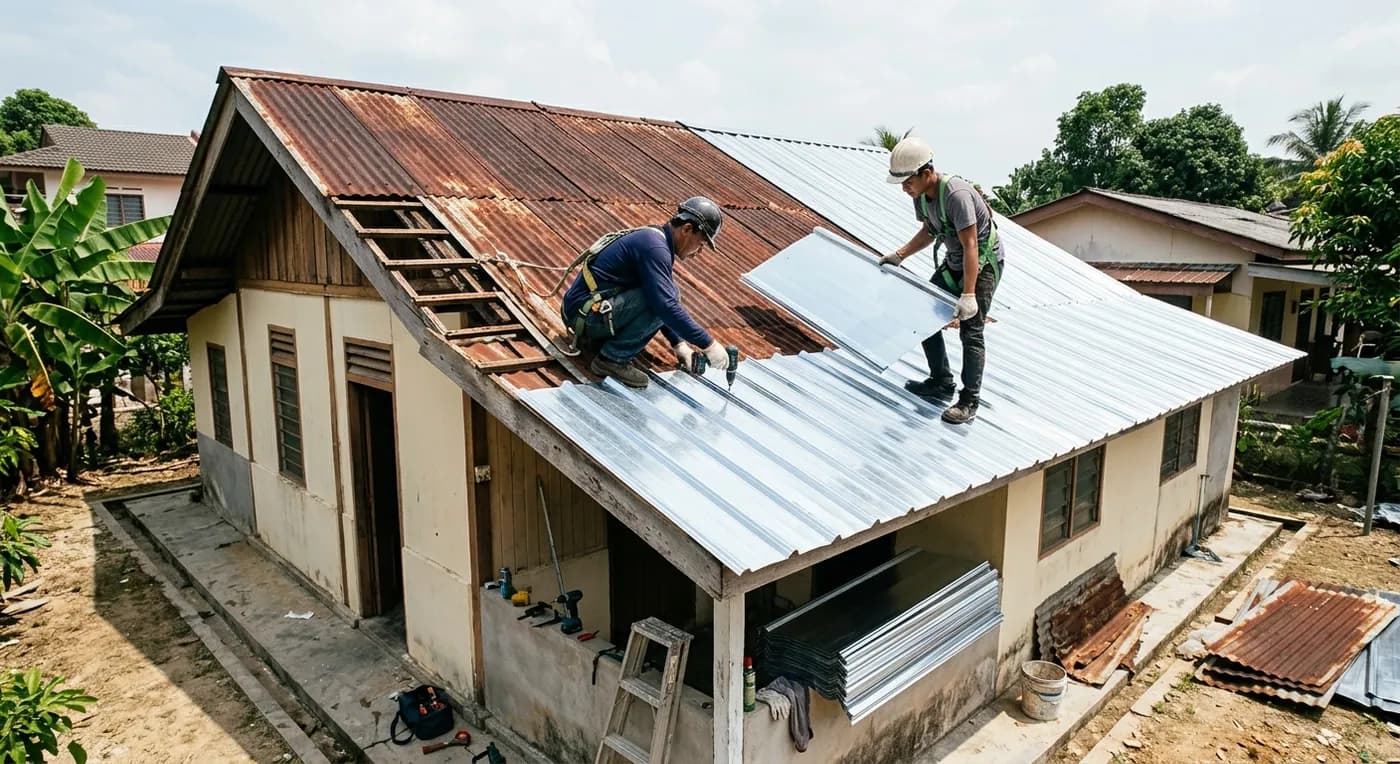
Many terrace house owners start asking about roof insulation when the upper floor feels hot in the afternoon, or when rain on a metal roof is simply too loud. Insulation does help with both, but it is also closely tied to roof leaks in ways that are rarely explained. This article covers the common types of insulation, where they are fitted, how they relate to leak problems, and when is the best time to install them.
What Roof Insulation Is
A layer under the roof
Roof insulation is a layer fitted under the roof covering or above the ceiling to reduce the heat and noise that reach the rooms below. In most Malaysian terrace houses, the space between the roof and the ceiling gets very hot at midday because the sun heats the roof directly. An insulation layer helps limit the radiant heat travelling from the underside of the roof down to the ceiling.
Common types
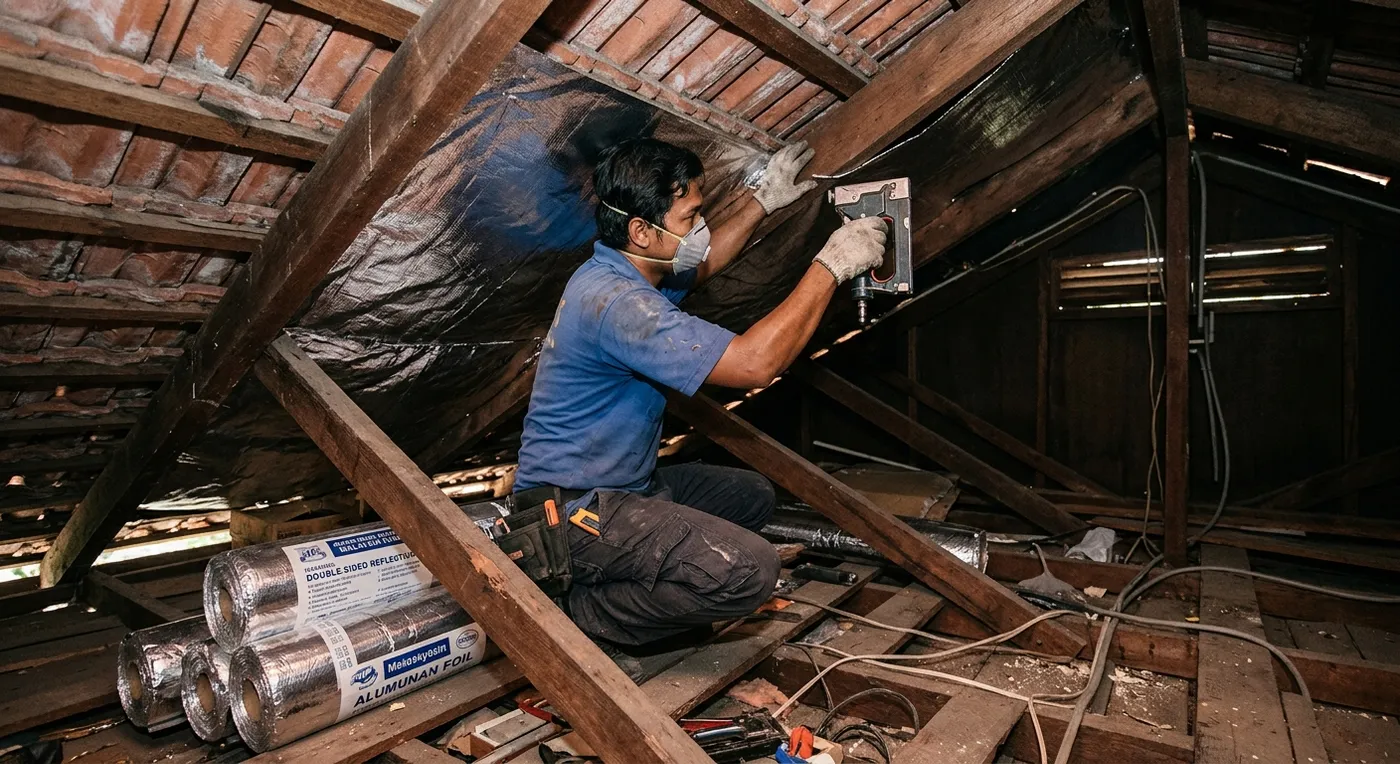
- Aluminium foil – a thin sheet that reflects radiant heat. Usually laid under tiles or metal roofing when the roof is built or replaced.
- Foil with a foam backing – foil bonded to a thin foam layer, adding a little thickness and helping to dampen sound.
- Fibre wool rolls – a thick blanket laid over the ceiling, helping cut heat transfer and noise.
The right choice depends on the roof type, access to the ceiling space and whether the roof is going to be opened up.
What insulation cannot do
Insulation is not a substitute for a sound roof. It does not seal holes, stop rust or fix a leaking joint. If the roof has rusted through or the tiles are cracked, putting insulation under it only postpones the problem and can make the repair harder later. How much difference it makes to comfort also varies from house to house, depending on orientation, roof type, ceiling height and ventilation.
How Insulation Relates to Roof Leaks
Drips that are not leaks
On a zinc or metal deck roof with nothing underneath, moisture in humid air can condense on the underside of the metal, especially early in the morning when the roof is cool. Those drops fall onto the ceiling and leave stains that look exactly like a leak, even though there is no hole in the roof. This happens most on kitchen extensions and store rooms at the back of terrace houses. Properly fitted insulation helps reduce it, because humid air no longer touches the metal directly.
Insulation can hide the real leak
On the other hand, when a roof really is leaking, an insulation layer can catch the water and carry it well away from the source before it drips onto the ceiling. That makes the hole harder to find. Wet fibre insulation also turns heavy, sags and can go mouldy. That is why a leak should be fixed before new insulation goes in, and insulation that has been damaged by water should be removed.
Signs your insulation is damaged
- Foil that is torn or sagging between the rafters.
- A musty smell coming from the ceiling space.
- Water marks or mould on the top side of the ceiling boards.
- Fibre rolls that have compressed or changed colour.
When to Fit Insulation
During a roof replacement
The best time is when the roof is opened up for replacement. Once old zinc sheets come off or tiles are lifted, foil can be laid straight over the rafters and battens before the new roof goes on. It costs less because there is no extra work to open the roof. If you are thinking about replacing your roof, we compare the materials in our article on metal deck, zinc or tiles.
Without opening the roof
If the roof is still in good shape, insulation can be fitted from inside through the ceiling space, either fixed under the rafters or laid over the ceiling. How easy this is depends on access: a terrace with a small manhole and a cramped ceiling space can take longer.
Alongside waterproofing
For terrace houses with a flat concrete roof, insulation under the roof is not the usual approach. A good waterproofing layer on top of the flat roof matters more for keeping water out of the top-floor rooms.

Points Specific to Terrace Houses
Shared walls and connected ceiling spaces
In some older terraces, the ceiling space runs over the shared wall into the neighbour's unit. This needs to be considered when fitting insulation so the work finishes neatly at the boundary of your own house.
Add-on roofs at the back
Many owners extend the kitchen with a low-pitched zinc or metal deck roof. This is usually the hottest and noisiest part of the house, and the one most prone to condensation drips. If the budget is tight, starting the insulation there is a sensible choice.
By area
Terraces in dense urban areas such as Cheras, Puchong or Seremban often have add-on roofs and renovations that differ from unit to unit. Each house has to be judged on what is actually above its own ceiling.
Ceiling space ventilation
A sealed-up ceiling space traps hot, humid air. When fitting insulation, make sure existing vents under the eaves or along the ridge are not blocked. Moving air helps keep humidity down, which also lowers the risk of mould on the truss timber and ceiling boards.
Cost and Process
Price
Roof insulation starts from RM5 per sq ft. The actual cost depends on the material, the area and whether it goes in during a roof replacement or from inside the ceiling space. See starting prices for our other services on the services section.
The steps
- Send photos of the roof, the ceiling space if you can, and your location on WhatsApp.
- Receive an initial estimate.
- A free on-site inspection to measure up and check for any existing leaks.
- An exact quote before work begins.
For projects of RM3,000 and above, instalments of up to 3 months interest-free can be arranged with a 30% deposit.