Why Your Roof Leaks Only in Heavy Rain
Dry in a drizzle but dripping in an afternoon storm? These are the usual causes of heavy-rain roof leaks and how to work out where the water gets in.
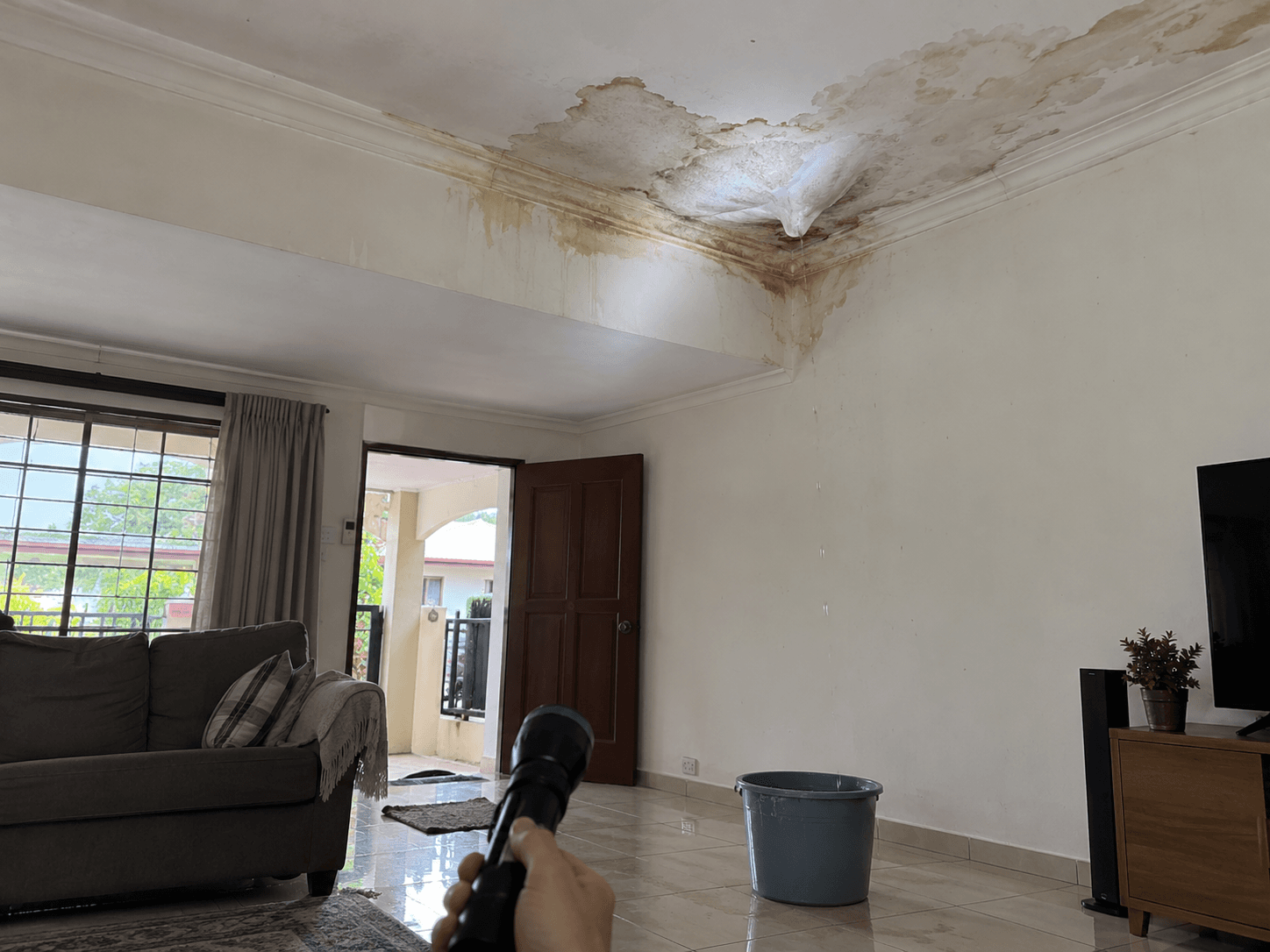
Plenty of Malaysian homeowners know the pattern: light rain causes no trouble, but when an afternoon storm rolls in with strong wind, water starts dripping from the ceiling. That is not bad luck. Heavy rain dumps far more water in a short time, and wind pushes it in directions that normally stay dry. Weak spots that cope with ordinary rain begin to let water through. This article explains the most common causes and how you can trace them from below, without climbing onto the roof.

Why the leak only shows up in heavy rain
A roof is designed to shed water downhill along its slope. As long as water flows calmly, a slightly loose joint or a short sheet overlap can still hold. Things change when the rain becomes intense.
Wind pushes water the wrong way
The afternoon storms common in the Klang Valley and most other states come with strong gusts. Wind drives water up through the overlaps in zinc or tile, against the slope. That water gets under the sheets and drips onto the ceiling, even when no hole is visible from above.
More water than the drainage can carry
In a downpour, gutters and roof valleys must carry a huge volume of water. If a gutter is narrow, dirty or poorly sloped, water overflows at the edge and finds its way inside under the roof line. Blocked gutters have their own article in this series, but they are one of the leading causes of storm leaks.
The east coast monsoon
For homes in Kelantan, Terengganu and Pahang, the monsoon season from November to January brings days of continuous rain. A roof that only weeps a little the rest of the year shows its real problems during this period. Owners in places like Kuantan are wise to have the roof checked before November.
The most common causes
From our inspection work, most heavy-rain leaks come from the same handful of places. Knowing this list helps you describe the problem clearly when asking for a quote.
Loose or perished screws and washers
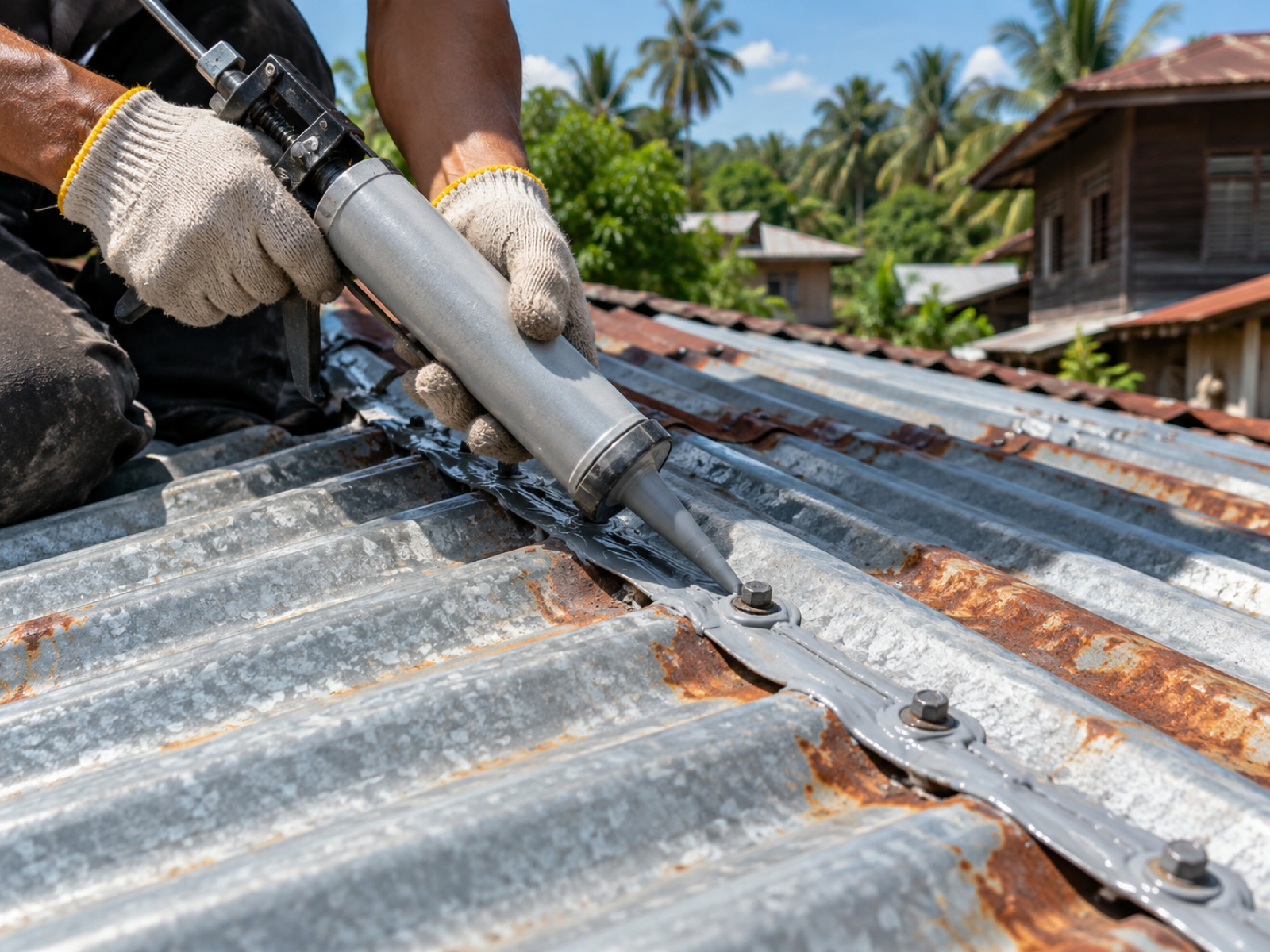
Zinc and spandek roofs are fixed with screws that carry a rubber washer. After years under the sun, that rubber hardens and cracks. Screws also work loose as the sheets expand and contract every day. Each failed screw becomes a small path for water.
Overlaps that are too short
If zinc sheets or tiles do not overlap far enough, or the roof pitch is too shallow, wind-driven rain gets in easily. This is common on add-on roofs over kitchens or car porches that were built later.
Cracked ridges and tile mortar
On tile roofs, the ridge along the top is usually bedded in cement mortar. That mortar cracks and comes loose over time. Cracked tiles also let water in; the warning signs are covered in our article on cracked roof tiles.
Flashing where the roof meets a wall
Wherever a roof meets a wall, such as a kitchen roof joined to the main house, a strip of flashing covers the gap. If the flashing lifts or the sealant around it cracks, water running down the wall goes straight inside.
How to trace where the water gets in
You do not need to go up on the roof to help find the cause. In fact, climbing a wet or fragile roof is dangerous. A few simple observations from inside the house are already very useful.
Notice when the leak happens
Only when it is windy
If the leak only appears when rain comes from one direction, the cause is usually an overlap or flashing on the side of the roof facing the wind.
Only after long rain
If water only shows up after rain has fallen for a long time, an overflowing gutter or a blocked valley is the more likely cause.
Dripping long after the rain stops
If water keeps dripping well after the rain has stopped, it may be trapped above the ceiling or under the tiles, and the damage may be wider than it looks.
Mark it and take photos
Mark the drip point on the ceiling with tape, photograph the stain and note the rain direction and time. If you can safely reach the space above the ceiling, photos of wet trusses or timber are very helpful too.
Do not assume the source is above the stain
Water can travel a long way along a truss or under a sheet before it drips. That is why patching only the spot above the stain so often fails. A proper inspection follows the water path from the stain back to the real source.
What to do next
Once you know the leak pattern, the next step is an inspection so the cause is fixed once.
Safe temporary steps
Put a container under the drip, move furniture and electrical items away, and switch off ceiling lights if water is dripping near wiring. Avoid poking holes in the ceiling or going onto the roof during rain.
Inspection and quote
Send photos of the ceiling, the roof if it is visible, and your location on WhatsApp. We give an initial estimate, then carry out a free on-site inspection in areas such as Petaling Jaya and Ipoh before giving an exact quote. Leak repair starts from RM150 per job; the full list is on our services page. For prices by roof type, see our guide to roof leak repair costs.
A roof that only leaks in storms is giving you an early warning. Fixing it before the next rainy season is usually cheaper than waiting for the ceiling and trusses to suffer.